There is often, by both Messianics and Muslims alike, a tendency to suggest that a Christian who believes that they are saved by the Cross only does so because they desire to sin. That is, they put forth the idea that because I plan to, say, have an affair this weekend, that I am relying on the Cross to save me from this.
This is NOT the case.
Paul addresses this argument very clearly in Romans 6. “What shall we say then? Are we to continue in sin that grace may abound? 2 By no means! How can we who died to sin still live in it? 3 Do you not know that all of us who have been baptized into Christ Jesus were baptized into his death? 4 We were buried therefore with him by baptism into death, in order that, just as Christ was raised from the dead by the glory of the Father, we too might walk in newness of life.”
Anyone who makes a different argument is unscriptural. The Cross is not license to sin, and heaven forbid it is ever viewed as such.
More clearly than even this: I do not take the Cross as license to sin.
And Paul very clearly addresses this only one chapter later: “18 For I know that nothing good dwells in me, that is, in my flesh. For I have the desire to do what is right, but not the ability to carry it out. 19 For I do not do the good I want, but the evil I do not want is what I keep on doing. 20 Now if I do what I do not want, it is no longer I who do it, but sin that dwells within me.”
That is, Paul recognizes that sin continues in his flesh. That he, himself, continues to sin. Does he do this because the Cross has given him license to do so? Of course not. He does this because he is a sinful human being. So does Paul then argue that his sin is not sinful? Again, no. He continues:
"21 So I find it to be a law that when I want to do right, evil lies close at hand. 22 For I delight in the law of God, in my inner being, 23 but I see in my members another law waging war against the law of my mind and making me captive to the law of sin that dwells in my members. 24 Wretched man that I am! Who will deliver me from this body of death? 25 Thanks be to God through Jesus Christ our Lord! So then, I myself serve the law of God with my mind, but with my flesh I serve the law of sin."
That is, realizing that sin continues to exist and to reign in his mortal body, Paul cries out “Wretched man that I am! Who will deliver me from this body of death?” Note, Paul does not say “Wretched man that I was,” but rather “that I am.” Paul is building clearly on the premise he established in chapter 6 regarding sin in his mortal body. And yet Paul follows this with a sentence which must be a top three contender for the most beautiful sentences in all of Holy Scripture: “There is, therefore, now no condemnation for those who are in Christ Jesus.” Some manuscripts have a scribal error here, which the KJV picks up on and publishes, but Paul ended the sentence at “Jesus.” How do I know? Because the added text to the end of Romans 8:1 comes directly from Romans 8:4, verbatim. It is, therefore, very likely a copyists’ error, and the bulk of the manuscript evidence bears this out. That Paul, who finds sin continuing to reign in his body, can say with absolute certainty that “There is no condemnation for those who are in Christ Jesus” is a statement of earth-shattering proportions. Now, we can debate about what it means to be “in Christ Jesus,” but whatever it means, it cannot mean any of those things Paul has already eliminated in the previous chapters. That is, we cannot argue that one who is “in Christ Jesus” would not continue to sin, because Paul himself has already addressed that argument.
Monday, January 28, 2019

Thursday, December 20, 2018
Why Allah is NOT God
 If Allah forgives sins just by saying "They are forgiven," then those sins are not punished.
That means that at the end of time, some sins will be unpunished.
 Allah cannot, therefore, be infinite in his attribute of justice, because justice is not accomplished in those cases. Allah CAN be infinite in his attribute of mercy, but not justice.
If Allah is not infinite in some attribute, then he is finite in that attribute, and thereby less than perfect.
Further, Allah cannot punish Jews and Christians for those sins, because the Qur'an says "No bearer of burdens shall bear the burden for another." That is, no sinful person can bear another person's sins. Only a person who was completely sinless, like Jesus, could bear the sins of another. But you Muslims deny that He did.
The only reasonable conclusion is this: Allah is finite in at least one attribute, and thereby NOT God. The only person who COULD bear the guilt of your sins is the one person the Christians say DID bear the guilt of your sins.
Come home to Jesus. Turn from the idol worship of the black stone and come home to Jesus. He created you, He loves you, and He will forgive, because Justice has already been accomplished. Come home to Jesus.
Thursday, December 6, 2018

Wednesday, October 31, 2018
The Holy NAME of God vs. the Qur'an
"אֱלֹהִים" (Elohim) is the generic word for "god." It is used of The God of Israel, and it is also used of the pagan gods of the surrounding regions. We see this very clearly in Deuteronomy 6:13-15:
13 It is the LORD your God you shall fear. Him you shall serve and by his name you shall swear. 14 You shall not go after other gods, the gods of the peoples who are around you— 15 for the LORD your God in your midst is a jealous God—lest the anger of the LORD your God be kindled against you, and he destroy you from off the face of the earth.
here's the passage in Hebrew:
13 אֶת־יְהוָ֧ה אֱלֹהֶ֛יךָ תִּירָ֖א וְאֹת֣וֹ תַעֲבֹ֑ד וּבִשְׁמ֖וֹ תִּשָּׁבֵֽעַ׃
14 לֹ֣א תֵֽלְכ֔וּן אַחֲרֵ֖י אֱלֹהִ֣ים אֲחֵרִ֑ים מֵאֱלֹהֵי֙ הָֽעַמִּ֔ים אֲשֶׁ֖ר סְבִיבוֹתֵיכֶֽם׃
15 כִּ֣י אֵ֥ל קַנָּ֛א יְהוָ֥ה אֱלֹהֶ֖יךָ בְּקִרְבֶּ֑ךָ פֶּן־יֶ֠חֱרֶה אַף־יְהוָ֤ה אֱלֹהֶ֙יךָ֙ בָּ֔ךְ וְהִשְׁמִ֣ידְךָ֔ מֵעַ֖ל פְּנֵ֥י הָאֲדָמָֽה׃
The words I've highlighted here are all forms of "Elohim" or "Eloah" or "El."
So clearly, the word "Elohim" can mean both the God of Israel and also the pagan gods of other nations.
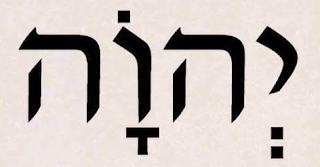
But the God of Israel also has a NAME, which He tells to Moses in Exodus 3:15:
15 God also said to Moses, “Say this to the people of Israel: ‘The LORD, the God of your fathers, the God of Abraham, the God of Isaac, and the God of Jacob, has sent me to you.’ This is my name forever, and thus I am to be remembered throughout all generations.
In our English translations, we write the word "יהוה" as "LORD," in all capital letters, to distinguish it from other words which mean "Lord" or "lord," such as "אָדוֹן," (adon) which is used of royalty.
That name is "יהוה," pronounced by some as "Yahweh" and others as "Yehovah."
That name is used 6827 times in the Hebrew Bible... more than all the other titles of God combined. It is clearly God's preferred form of address.
Yet in the 2nd and 3rd centuries, due to Roman political pressure, the Jews stopped speaking The NAME, because the Romans forbade it under penalty of death.
So by the 7th century, the Jews and Christians were using the term "LORD" or "God" in place of The NAME.
Muhammad never heard The NAME, because it wasn't being publicly spoken at his time, and so he never, even once, includes it in the Qur'an.
This goes to prove that the Roman ban on speaking the NAME kept it out of the Qur'an. This also proves that the Qur'an was NOT dictated by YHVH, but rather was the pure invention of Muhammad himself, making up some parts and copying others from the stories he heard people telling. But since they did not speak The NAME at that point, Muhammad never heard it. Muhammad didn't know the NAME of God, and instead used the Arabic generic word for "god."
13 It is the LORD your God you shall fear. Him you shall serve and by his name you shall swear. 14 You shall not go after other gods, the gods of the peoples who are around you— 15 for the LORD your God in your midst is a jealous God—lest the anger of the LORD your God be kindled against you, and he destroy you from off the face of the earth.
here's the passage in Hebrew:
13 אֶת־יְהוָ֧ה אֱלֹהֶ֛יךָ תִּירָ֖א וְאֹת֣וֹ תַעֲבֹ֑ד וּבִשְׁמ֖וֹ תִּשָּׁבֵֽעַ׃
14 לֹ֣א תֵֽלְכ֔וּן אַחֲרֵ֖י אֱלֹהִ֣ים אֲחֵרִ֑ים מֵאֱלֹהֵי֙ הָֽעַמִּ֔ים אֲשֶׁ֖ר סְבִיבוֹתֵיכֶֽם׃
15 כִּ֣י אֵ֥ל קַנָּ֛א יְהוָ֥ה אֱלֹהֶ֖יךָ בְּקִרְבֶּ֑ךָ פֶּן־יֶ֠חֱרֶה אַף־יְהוָ֤ה אֱלֹהֶ֙יךָ֙ בָּ֔ךְ וְהִשְׁמִ֣ידְךָ֔ מֵעַ֖ל פְּנֵ֥י הָאֲדָמָֽה׃
So clearly, the word "Elohim" can mean both the God of Israel and also the pagan gods of other nations.

But the God of Israel also has a NAME, which He tells to Moses in Exodus 3:15:
15 God also said to Moses, “Say this to the people of Israel: ‘The LORD, the God of your fathers, the God of Abraham, the God of Isaac, and the God of Jacob, has sent me to you.’ This is my name forever, and thus I am to be remembered throughout all generations.
In our English translations, we write the word "יהוה" as "LORD," in all capital letters, to distinguish it from other words which mean "Lord" or "lord," such as "אָדוֹן," (adon) which is used of royalty.
That name is "יהוה," pronounced by some as "Yahweh" and others as "Yehovah."
That name is used 6827 times in the Hebrew Bible... more than all the other titles of God combined. It is clearly God's preferred form of address.
Yet in the 2nd and 3rd centuries, due to Roman political pressure, the Jews stopped speaking The NAME, because the Romans forbade it under penalty of death.
So by the 7th century, the Jews and Christians were using the term "LORD" or "God" in place of The NAME.
Muhammad never heard The NAME, because it wasn't being publicly spoken at his time, and so he never, even once, includes it in the Qur'an.
This goes to prove that the Roman ban on speaking the NAME kept it out of the Qur'an. This also proves that the Qur'an was NOT dictated by YHVH, but rather was the pure invention of Muhammad himself, making up some parts and copying others from the stories he heard people telling. But since they did not speak The NAME at that point, Muhammad never heard it. Muhammad didn't know the NAME of God, and instead used the Arabic generic word for "god."
Thursday, August 2, 2018
Beliefs Don't Change Facts. Facts, if You're Reasonable, Should Change Your Beliefs.
 The statement is true. But the problem is that Mr. Gervais holds that religion is belief, not fact. That "belief" doesn't indicate something someone actually perceives, but rather that someone who "believes" has some misty notion that X is so. For example, one might believe that Norway is a country and one might also believe that Santa Clause is real.
 That's not how Christians use "believe." I believe it's raining when I go outside and rain falls, or when I'm inside but I hear the rain. That is, I have some amount of evidence for my beliefs, or I do not believe them.
Children believe that Santa Clause is real because there are presents under the tree in the morning and the cookies have been eaten, but those beliefs are based on provable deceptions. We often hear the story of the child who stayed awake all night, hiding at the top of the stairs, only to find mommy and daddy placing the presents, eating the cookies, and having a smooch. Such a child, when presented with the facts, ceases to hold "belief" in Santa Clause. According to what Mr. Gervais is saying in this meme, however, Christians who are presented with the same level of evidence as the hiding child refuse to change their beliefs.
This is disingenuous. If, somehow, the body of Jesus could be produced, I would cease to be a Christian. But that is the level of evidence the child has who sees his parents kissing under the mistletoe at midnight.
The problem for Mr. Gervais is that Christianity has ALWAYS been an evidential faith. The day Jesus rose from the dead, He spent some amount of time convincing His followers that He was not a ghost or an illusion. He invited them to touch Him, to handle Him and see for themselves, and then He ate with them as further proof. Later, He makes Thomas put his hand in His side, and his fingers into His hands, as evidence. He did not berate them for not having blind faith, He provided them with evidence.
Christians have done very well maintaining this level of evidentiary exploration all across the ages, making logical, philosophical, historical, and archaeological arguments to support their faith. Indeed, when these tests of reason and science are applied to the Bible, it continually passes them. In over 2400 archaeological excavations, for example, the Bible has been shown to be accurate.
Some examples are: (click the titles for links)
Evidence That Demands a Verdict: Life-Changing Truth for a Skeptical World
by Josh and Sean McDowell
I Don't Have Enough Faith to be an Atheist
by Drs. Norman Geisler and Frank Turek
Mere Christianity
by C.S. Lewis
What's So Great about Christianity
by Dinesh D'Souza
Cold Case Christianity
by J. Warner Wallace
Reasonable Faith
by Dr. William Lane Craig
(NOTE: All of these links will open in a new window, so you can finish reading this blog even if you click on them.)
Ironically, then, it is Mr. Gervais himself who, when presented with the mountain of evidence for the Christian faith, refuses to "believe." For him, no amount of evidence is sufficient, but any amount of rebuttal is quite adequate indeed. It is the atheist, not the Christian, who believes in what he cannot see or know or prove. And that is not belief at all, that is delusion.
Wednesday, May 9, 2018
Science vs. The Bible
 In 1860, archaeological expeditions in the ancient city of Babylon proved, conclusively, beyond any shadow of a doubt, that Belshazzar was not the king of Babylon at the time of the Babylonian exile, but that his brother was. This shook the biblical world to the core, because here, science had finally, conclusively proven, that there was an error in the Bible. There could be no disputing it, there could be no arguing, the Bible was in error and science had proven it so.
 This idea stood for 90 years, until, in 1950, further digging in the same area discovered that, while Belshazzar's brother was indeed king, he spent his whole reign out of the kingdom. He was elsewhere, and his brother, Belshazzar, acted as king in his stead.
When this was discovered, we suddenly, for the first time ever, understood the phrase at Daniel 5:29 which reads:
"Then Belshazzar gave the command, and Daniel was clothed with purple, a chain of gold was put around his neck, and a proclamation was made about him, that he should be the third ruler in the kingdom."
Why did Belshazzar only make Daniel the third highest in the kingdom? Because he himself was only the second highest, and he couldn't make Daniel any higher than third. The Bible was right all along. Our understanding of what the text said simply came more in line with the reality of what it was telling us through science done well. But science done poorly had convinced people the Bible was wrong.
The moral of the story is this: Science changes. What is scientific "fact" today may be overthrown tomorrow. If you went to college to study science, and you found out your textbooks were two hundred years old, how much confidence would you have in the quality of that education? Now, imagine a student two hundred years from now studying science using today's textbooks.

The Bible, though, was written by a perfect being. God, who is never wrong, wrote once, for all time. Our failures to understand what is there may prevent us from seeing the truth, but the truth was there all along.
Saturday, May 5, 2018
A Christian Response to a Jews for Judaism article.
Responding to the article found here:
http://jewsforjudaism.ca/why-jesus-is-not-the-jewish-messiah/
 1. "There is no evidence that Jesus really had this pedigree, and the Christian Bible actually claims that he did not have a “birth-father” from the tribe of Judah descending from King David and King Solomon (Matt. 1:18-20)."
This is not the case. The father's inheritance CAN be passed through daughters as well, according to Moses in Numbers 27, if they marry within the tribe. Point 1 refuted.
2. "When the Messiah is reigning as King of Israel, the Jews will be ingathered from their exile and will return to Israel, their homeland (Deut. 30:3; Isaiah 11:11-12; Jeremiah 30:3, 32:37; Ezekiel 11:17, 36:24).
This has clearly not yet happened and we still await its fulfillment."
This is the case, but it misses something essential. Even the Jews believe in two messiahs... one they call "Messiah son of Joseph," and the other they call "Messiah son of David." (To see this on a Jewish website, see Menorah.com HERE. It will open in a new window.) The Son of Joseph will come and suffer and die, fulfilling some of the prophecies of Messiah. The Son of David will come and rule from His father's throne.
Yeshua fulfills both of these roles. Why did the Jews imagine it would be two men, instead of one? Because they did not count on Messiah rising from the dead. Point 2 refuted.
3. "The Temple in Jerusalem will be rebuilt (Isaiah 2:2-3, 56:6-7, 60:7, 66:20; Ezekiel 37:26–27; Malachi 3:4; Zech. 14:20-21).
The Temple was still standing in Jesus’ day. It was destroyed 38 years after Jesus’ crucifixion and it has not yet been rebuilt."
Again, while this is true, it is yet to be fulfilled. But even the Christians believe that the Temple will be rebuilt. Jesus prophesies it in the New Testament. This goes back to the two roles of Messiah... one (son of Joseph) the suffering servant, the other (son of David) the coming king. Point 3 was refuted in the response to point 2.
4."There will be universal disarmament and worldwide peace with a complete end to war (Micah 4:1-4; Hoseah 2:20; Isaiah 2:1-4, 60:18).
Wars have increased dramatically in the world since the start of Christianity."
Again, absolutely true. Again, refuted in the responses to points 2 and 3. Messiah does not reign on earth yet. He will at some point yet future, but He does not now. Point 4 refuted in points 2 and 3.
5. "The Messiah will reign as King at a time when all the Jewish people will observe G-d’s commandments (Ezekiel 37:24; Deut. 30:8,10; Jeremiah 31:32; Ezekiel 11:19-20, 36:26-27).
Jesus never ruled as King, nor have all Jews embraced the commandments of G-d’s Torah."
See points 2-4
6. "The Messiah will rule at a time when all the people of the world will come to acknowledge and serve the one true G-d (Zechariah 3:9, 8:23,14:9,16; Isaiah 45:23, 66:23; Jeremiah 31:33; Ezekiel 38:23; Psalm 86:9; Zeph. 3:9).
This, as well, has not yet taken place and we await its fulfillment."
The Christian bible absolutely agrees with this. "for it is written, “As I live, says the Lord, every knee shall bow to me, and every tongue shall confess to God.”" (Romans 14:11) Again, this prophecy is wrapped up in the dual roles of Messiah. Yeshua came first as the suffering servant. When He comes again, He will come as conquering King.
7. "Anyone can claim to be the Messiah or a group of people can claim that someone is the Messiah. However, if that person fails to fulfill all the criteria found in the Jewish Bible, he cannot be the Messiah.
According to the Christian scriptures, Jesus seems to have understood this. As he was being crucified by the Romans, he cried out “My G-d, my G-d, why have You forsaken me?” (Matthew 27:46)."
Once again, the article is only looking at prophecies which have not yet been fulfilled. Dual nature of Messiah. The second coming of Christ. etc.
I do, however, want to address the last claim here made, regarding Matthew 27:46. If you know the Psalms, you'll realize that Jesus wasn't crying out as being forsaken by God, but rather pointing everyone there to a prophecy of the very event they were witnessing. Even without the controversial translation of "pierced my hands and my feet" I can find five fulfilled prophecies of the crucifixion in Psalm 22, which begins "My God, My God, why have you forsaken me?"
Response to "The Christian Rebuttal"
"It’s important to understand that this second coming doctrine is an admission that Jesus didn’t fulfill the Messianic criteria. This rationalization for his failure certainly provides no reason to accept him as the Messiah today.
Furthermore, the Jewish Bible does not have a Messianic “installment plan” where Messiah comes, fails in his mission, and then returns thousands of years later to finally succeed."
Why refuse to acknowledge the dual roles of Messiah when arguing with Christians? Does that seem forthright? Especially when the actual Jewish belief on this topic supports the Christian response?
http://jewsforjudaism.ca/why-jesus-is-not-the-jewish-messiah/
 1. "There is no evidence that Jesus really had this pedigree, and the Christian Bible actually claims that he did not have a “birth-father” from the tribe of Judah descending from King David and King Solomon (Matt. 1:18-20)."
This is not the case. The father's inheritance CAN be passed through daughters as well, according to Moses in Numbers 27, if they marry within the tribe. Point 1 refuted.
2. "When the Messiah is reigning as King of Israel, the Jews will be ingathered from their exile and will return to Israel, their homeland (Deut. 30:3; Isaiah 11:11-12; Jeremiah 30:3, 32:37; Ezekiel 11:17, 36:24).
This has clearly not yet happened and we still await its fulfillment."
This is the case, but it misses something essential. Even the Jews believe in two messiahs... one they call "Messiah son of Joseph," and the other they call "Messiah son of David." (To see this on a Jewish website, see Menorah.com HERE. It will open in a new window.) The Son of Joseph will come and suffer and die, fulfilling some of the prophecies of Messiah. The Son of David will come and rule from His father's throne.
Yeshua fulfills both of these roles. Why did the Jews imagine it would be two men, instead of one? Because they did not count on Messiah rising from the dead. Point 2 refuted.
3. "The Temple in Jerusalem will be rebuilt (Isaiah 2:2-3, 56:6-7, 60:7, 66:20; Ezekiel 37:26–27; Malachi 3:4; Zech. 14:20-21).
The Temple was still standing in Jesus’ day. It was destroyed 38 years after Jesus’ crucifixion and it has not yet been rebuilt."
Again, while this is true, it is yet to be fulfilled. But even the Christians believe that the Temple will be rebuilt. Jesus prophesies it in the New Testament. This goes back to the two roles of Messiah... one (son of Joseph) the suffering servant, the other (son of David) the coming king. Point 3 was refuted in the response to point 2.
4."There will be universal disarmament and worldwide peace with a complete end to war (Micah 4:1-4; Hoseah 2:20; Isaiah 2:1-4, 60:18).
Wars have increased dramatically in the world since the start of Christianity."
Again, absolutely true. Again, refuted in the responses to points 2 and 3. Messiah does not reign on earth yet. He will at some point yet future, but He does not now. Point 4 refuted in points 2 and 3.
5. "The Messiah will reign as King at a time when all the Jewish people will observe G-d’s commandments (Ezekiel 37:24; Deut. 30:8,10; Jeremiah 31:32; Ezekiel 11:19-20, 36:26-27).
Jesus never ruled as King, nor have all Jews embraced the commandments of G-d’s Torah."
See points 2-4
6. "The Messiah will rule at a time when all the people of the world will come to acknowledge and serve the one true G-d (Zechariah 3:9, 8:23,14:9,16; Isaiah 45:23, 66:23; Jeremiah 31:33; Ezekiel 38:23; Psalm 86:9; Zeph. 3:9).
This, as well, has not yet taken place and we await its fulfillment."
The Christian bible absolutely agrees with this. "for it is written, “As I live, says the Lord, every knee shall bow to me, and every tongue shall confess to God.”" (Romans 14:11) Again, this prophecy is wrapped up in the dual roles of Messiah. Yeshua came first as the suffering servant. When He comes again, He will come as conquering King.
7. "Anyone can claim to be the Messiah or a group of people can claim that someone is the Messiah. However, if that person fails to fulfill all the criteria found in the Jewish Bible, he cannot be the Messiah.
According to the Christian scriptures, Jesus seems to have understood this. As he was being crucified by the Romans, he cried out “My G-d, my G-d, why have You forsaken me?” (Matthew 27:46)."
Once again, the article is only looking at prophecies which have not yet been fulfilled. Dual nature of Messiah. The second coming of Christ. etc.
I do, however, want to address the last claim here made, regarding Matthew 27:46. If you know the Psalms, you'll realize that Jesus wasn't crying out as being forsaken by God, but rather pointing everyone there to a prophecy of the very event they were witnessing. Even without the controversial translation of "pierced my hands and my feet" I can find five fulfilled prophecies of the crucifixion in Psalm 22, which begins "My God, My God, why have you forsaken me?"
Response to "The Christian Rebuttal"
"It’s important to understand that this second coming doctrine is an admission that Jesus didn’t fulfill the Messianic criteria. This rationalization for his failure certainly provides no reason to accept him as the Messiah today.
Furthermore, the Jewish Bible does not have a Messianic “installment plan” where Messiah comes, fails in his mission, and then returns thousands of years later to finally succeed."
Why refuse to acknowledge the dual roles of Messiah when arguing with Christians? Does that seem forthright? Especially when the actual Jewish belief on this topic supports the Christian response?
Friday, April 20, 2018
Did Jesus Pray like a Muslim?
 This image is making the rounds, and this argument has been made to me repeatedly by my Muslim friends. They cite a portion of Matthew 26:39 to show that Jesus prayed in the posture of modern day Muslims. The saddest part of this argument is that they think it validates Islam.
What happens when we look at Matthew 26:39 for ourselves? What does the whole verse say?
Here is the ESV translation:
39 And going a little farther he fell on his face and prayed, saying, “My Father, if it be possible, let this cup pass from me; nevertheless, not as I will, but as you will.”
Here is the NIV translation:
39 Going a little farther, he fell with his face to the ground and prayed, “My Father, if it is possible, may this cup be taken from me. Yet not as I will, but as you will.”
Here is the KJV translation:
And he went a little further, and fell on his face, and prayed, saying, O my Father, if it be possible, let this cup pass from me: nevertheless not as I will, but as thou wilt.
and here is the Greek:
καὶ προελθὼν μικρὸν ἔπεσεν ἐπὶ πρόσωπον αὐτοῦ προσευχόμενος καὶ λέγων Πάτερ μου, εἰ δυνατόν ἐστιν, παρελθάτω ἀπ’ ἐμοῦ τὸ ποτήριον τοῦτο· πλὴν οὐχ ὡς ἐγὼ θέλω ἀλλ’ ὡς σύ.
What do we notice about this verse which should cause Muslims to stop using it?
the first thing Jesus says, in all of the English translations, is "My Father," or "O my Father," in the KJV. What does the Greek say? It says "Πάτερ μου," which translates as "Father of me."
here's a question for my Muslim friends: Does Allah have a son? Can anyone call Allah father?
Let me help you answer that.
Muhammad was asked what is the most important Sura in the entire Qur'an. Sahih Muslim reports that Abu Al Darda narrated: "Say, He is Allah, The One, (Surah 112) equals a third of the Qur'an." reported by Al-Thirmidhi, and Al- Albani classified it as an authentic Hadith.
Let us, then, look at the entirety of Surah 112:
1. Say: He is Allah, the One and Only;
2. Allah, the Eternal, Absolute;
3. He begetteth not, nor is He begotten;
4. And there is none like unto Him.
and in the Arabic:

For more information on this Surah, you can read here to validate what I'm saying:
https://www.islamreligion.com/articles/2812/chapter-112/
So the question then becomes: Where is the conflict between Matthew 26:39 and Surah 112?
Let us look again:
Matthew 26:39: And going a little farther he fell on his face and prayed, saying, “My Father,
Surah 112:3: He begetteth not, nor is He begotten;
How can Jesus call Allah his father, if Allah neither begets nor is begotten? And since verse 3 is arguably the most important verse of the most important surah of the whole Qur'an, doesn't it make sense that it should say clearly what it means?
If Matthew 26:39 is a reliable verse, then Jesus, the only sinless prophet of Islam (yes, according to the Qur'an, Jesus was sinless) commits Shirk, the worst possible sin.
If Matthew 26:39 is not a reliable verse, why are Muslims citing portions of it as if it were evidence?
Wednesday, April 11, 2018
Why the Qur'an affirms the Bible, and the problem that poses for Islam

The word of thy Lord doth find its fulfillment in truth and in justice: None can change His words: for He is the one who heareth and knoweth all.
Notice that it does not say "No one can change the Qur'an," but "None can change His words." That is, if Alllah has revealed words which are not the Qur'an, those are still the words of Allah.
Surah 18:27 backs this up perfectly:
And recite (and teach) what has been revealed to thee of the Book of thy Lord: none can change His Words, and none wilt thou find as a refuge other than Him.
Again, "None can change His Words," not "None can change the Qur'an." This is talking about all of the words of Allah, not just the Qur'an.
So when we look at Surah 3:3
It is He Who sent down to thee (step by step), in truth, the Book, confirming what went before it; and He sent down the Law (of Moses) and the Gospel (of Jesus) before this, as a guide to mankind, and He sent down the criterion (of judgment between right and wrong).
We are assured that since Allah revealed the Torah and the Gospel, they are Allah's incorruptible words.

Since the Torah and the Gospel are the words of Allah, they cannot be corrupted. Since the Gospel says that Jesus died, and the Qur'an says that Jesus didn't die, then Allah is wrong. Since Allah is wrong, Islam is false.
Feel free to look these references up yourself.
Now, why do I believe that the Bible I have today is the Gospel Muhammad was talking about?
Very, very easily. We have copies of the New Testament which predate Muhammad by 300 years. We know exactly what the Gospel was in Muhammad's day. It was exactly what is recorded in our Bibles today.
The Gospel that was around in Muhammad's time is exactly the same Gospel we have today. If Muhammad wanted to say that it was corrupted, he did a very, very poor job of it. In fact, Muhammad told the people to judge by the books they had between their hands... that is, Muhammad affirms the Torah and the Gospel as they existed in his day.
So if Muhammad is right, Allah is wrong. And if Allah is right, Muhammad is wrong. And either way, Islam is false.
Friday, March 16, 2018
Did God hate Esau?
Romans 9:13
As it is written, “Jacob I loved, but Esau I hated.”
Look at what happens to the two boys; Esau sells his birthright for a bowl of soup. Yes, Jacob tricked him (sort of), but the great blessing of God belonged to Esau, and he traded it away for a bit of comfort.
The Greek word Paul uses in Romans 9:13 is:
μισέω
which is
miseó.
Found on www.bible.cc, we read this:
3404 miséō – properly, to detest (on a comparative basis); hence, denounce; to love someone or something less than someone (something) else, i.e. to renounce one choice in favor of another.
That does, indeed, translate as hate, but perhaps it should more properly be "esteemed less than."
So it's not actual hatred, but a comparative thing. The Hebrew text that Paul is quoting is Malachi 1:3, where the Hebrew word has the same meaning... to detest.
שָׂנֵא
which is "sane"
Thursday, December 21, 2017
What do we Celebrate at Christmas?
 Christmas is not a celebration of the Birth of Christ, but rather the coming of Christ. They are different things.
Why don't we know when Jesus was born? Because Jews didn't celebrate birthdays... that was a pagan thing, commonly done by those who worshipped fertility gods like Ashtoreth. So for the first 300 years, nobody cared when Jesus was born.
But the Bible gives us some clues as to when He was born, and if we understand our Old Testament, we can narrow it down to a single week. You see, John 1:14 says "The word became flesh, and made his dwelling among us." The Greek word here translated as "made his dwelling" is also used in the Greek Septuagint version of the Old Testament as "Tabernacled," and is related to the "Feast of Tabernacles." That is, the feast prefigures the coming of the Messiah. Paul makes reference to this in Colossians 2:16-17 when He says
"16 Therefore let no one pass judgment on you in questions of food and drink, or with regard to a festival or a new moon or a Sabbath. 17 These are a shadow of the things to come, but the substance belongs to Christ."
That is, the feasts and the festivals, the Jewish holidays, are prophetic about the ministry of Jesus.
So Jesus was likely born during the Feast of Tabernacles, which is roughly in late September or early October.
 This conforms very well to what the Bible says regarding Jesus birth. "There were shepherds keeping watch over their flocks by night," it says, which is something that does happen in the late fall but absolutely does not happen in late December when it's too cold. Further, the Bible tells us that Mary and Joseph were traveling as a response to a census. This makes sense in the late fall, but by early winter, most of the roads of ancient Judea would be completely impassable, and no governor worth his office would demand everyone in his nation travel at a time when the roads were impassible.
 When was Jesus born? given this and other clues, we can track it to about September 29th of 4 BC.
Christmas, then, isn't about the Birth of Christ. That's a confusion. Christmas is about the coming of the Messiah... that is, Christmas is about the idea that God was willing to come and die for us. It's easy, then, to see why we get it confused with His birth, but the facts point elsewhere. Further, most educated Christians know that Jesus was not born on December 25th. It's possible, though, that Jesus was CONCEIVED in late December, since that is roughly 9 months before September 29th. The Catholic Church will disagree with this, and that's OK. It's not an important issue.
Wednesday, December 13, 2017
My Understanding of Hebrews 6:4-8
 Hebrews 6:4 For it is impossible, in the case of those who have once been enlightened, who have tasted the heavenly gift, and have shared in the Holy Spirit, 5 and have tasted the goodness of the word of God and the powers of the age to come, 6 and then have fallen away, to restore them again to repentance, since they are crucifying once again the Son of God to their own harm and holding him up to contempt. 7 For land that has drunk the rain that often falls on it, and produces a crop useful to those for whose sake it is cultivated, receives a blessing from God. 8 But if it bears thorns and thistles, it is worthless and near to being cursed, and its end is to be burned. (ESV)
First off, I found this in a commentary:
**************************************************
The “heavenly gift” is a euphemism for salvation, which the readers have “tasted.” The Greek word for “tasted” is the same here and in v. 5 and is used metaphorically indicating “to eat or drink,” thus experiencing something fully, not merely a superficial participation in something. There is no connotation in the word itself of tasting but not swallowing. This can be seen from the usage in Heb 2:9 [same Greek word in 2:9 as here] where Jesus “tasted” death for everyone, meaning he experienced the full force of physical death. This metaphorical rather than literal usage also precludes a reference here to the Lord’s Supper, although Ellingworth thinks the meaning cannot be entirely excluded. The third participial phrase describes those “who have shared in the Holy Spirit.” The NIV translation renders the noun metochous, “partakers, sharers” with the verbal idea “shared.” The author used this word previously in 3:1 and 3:14 to describe the close relationship that his readers share in the heavenly calling and in Christ. To become a “partaker” of the Holy Spirit indicates primarily “participation in” and denotes a close association with the Holy Spirit, implying reception of the Holy Spirit into one’s life. It is very unlikely the phrase refers to the reception of spiritual gifts of the Holy Spirit, as Hughes suggested.
Allen, David L. Hebrews. Nashville, TN: B & H Publishing Group, 2010. Print. The New American Commentary.
*************************************************************
This means that this passage ONLY applies to someone who has FULLY EXPERIENCED the salvation that comes through Christ. That this experience is complete and total, someone who does not lack in any way any bit of understanding. Someone who has "tasted" the Goodness of God in the same way that Christ "tasted" death... not a passing association with it, but a complete understanding. And who among us has such an understanding?
Secondly, there is the Holy Spirit. That is, it is the job of the Holy Spirit to call you to repentance, to bring you back into relationship with the Father through the Son. If you feel, in any way, a desire to be restored to the Father through the Son... that is, if ANYTHING at all inside you makes you desire to pray, or desire to repent, or desire to be in relationship with Christ, then it is the Holy Spirit which is fueling that desire. Since the Holy Spirit does not act in vain... that is.... if it were impossible for you to come to repentance, the Holy Spirit would not waste His time with you... if you have ANY desire at all within you to be in relationship with Christ, then this verse does not apply to you. Again, if it were impossible for you to be restored to salvation, the Holy Spirit would not be calling you to repentance.
What is the mission of the Holy Spirit? The Spirit's job is to comfort, to console, and to woo. The Spirit brings us into relationship with Christ, and sustains us in that relationship. That's why the only unforgivable sin is not blasphemy against the SON or the FATHER, but against the SPIRIT. What is Blasphemy against the Spirit? It is to go your entire life and reject the calling of the Spirit. To go your whole life without responding to the Spirit's call is the highest form of blasphemy. Thus, if the Spirit is calling you, you have NOT committed the unforgivable sin, and you CAN be restored to The Father through The Son.
I hope that helps.
Saturday, December 2, 2017
The First Syllable of The NAME of God
The Divine NAME is pronounced "Yehovah." It comes from three Hebrew words, "hayah," "hoveh," and "ye-hee-yeh," meaning "was," "is," and "will be." This is even made clear in the New Testament, written in Greek, when God, speaking to John in Revelation 1:8 says “I am the Alpha and the Omega,” says the Lord God, “who is and who was and who is to come, the Almighty.”
People who insist that it's "Yahuwah" or "Yahovah" all make the same mistake...they know the word "HalleluYAH," and they assume that the Hebrews shortened names like the English speakers do.
When English speakers
 shorten a name, we take "Michael" and we make it "Mike." We take "Donald" and we make it "Don." We take "William" and we make it "Will." That is, almost always, we take the initial syllable of the name and drop the rest.
The Hebrews didn't do that. They would drop letters from the middle of the word. Jesus' name is an example of this. In the pre-2nd temple period, the name was "Yehoshua" (Joshua). That's the name of the sixth book of the Bible. But by the 2nd temple period, the second syllable had dropped out of the word and it simply became "Yeshua," losing that "ho" sound. Similarly, "Yehovah" becomes "Y----ah."
The "Yeho" is actually preserved in several places, however. Hebrew names are often short sentences... Daniel, for example, comes from "Dan" meaning "Judge," and "El," meaning "God." Daniel means "God is my Judge." Where do we find the "Yeho" preserved? In the name "Yehoshua..." Joshua. Jesus' name, "Yehoshua," is a contraction of The NAME of God, "Yehovah," and the word for Salvation, "Yeshuat." Thus, Jesus, or "Yehoshua," means "The Salvation of the LORD," or "Yehovah's Salvation," or possibly "Yehovah saves."
For more information on this topic, see the amazing work of my friend Nehemia Gordon at
www.nehemiaswall.com
People who insist that it's "Yahuwah" or "Yahovah" all make the same mistake...they know the word "HalleluYAH," and they assume that the Hebrews shortened names like the English speakers do.
When English speakers

The Hebrews didn't do that. They would drop letters from the middle of the word. Jesus' name is an example of this. In the pre-2nd temple period, the name was "Yehoshua" (Joshua). That's the name of the sixth book of the Bible. But by the 2nd temple period, the second syllable had dropped out of the word and it simply became "Yeshua," losing that "ho" sound. Similarly, "Yehovah" becomes "Y----ah."
The "Yeho" is actually preserved in several places, however. Hebrew names are often short sentences... Daniel, for example, comes from "Dan" meaning "Judge," and "El," meaning "God." Daniel means "God is my Judge." Where do we find the "Yeho" preserved? In the name "Yehoshua..." Joshua. Jesus' name, "Yehoshua," is a contraction of The NAME of God, "Yehovah," and the word for Salvation, "Yeshuat." Thus, Jesus, or "Yehoshua," means "The Salvation of the LORD," or "Yehovah's Salvation," or possibly "Yehovah saves."
For more information on this topic, see the amazing work of my friend Nehemia Gordon at
www.nehemiaswall.com
Subscribe to:
Posts (Atom)